On January 8, 2026, at the headquarters of the Hanoi Department of Industry and Trade, the Department of E-commerce and Digital Economy and the Department of Innovation, Green Transformation and Industrial Promotion (Ministry of Industry and Trade) held a working session with the Hanoi Department of Industry and Trade to exchange information, provide guidance, and orient the implementation of related tasks in the fields managed by the industry and trade sector.
In implementing the Party and State's policies and guidelines on the development of science, technology, innovation, and digital transformation, especially Resolution No. 57-NQ/TW of the Politburo, on the morning of January 8, 2026, at the headquarters of the Hanoi Department of Industry and Trade, the Department of E-commerce and Digital Economy and the Department of Innovation, Green Transformation and Industrial Promotion (Ministry of Industry and Trade) held a working session with the Hanoi Department of Industry and Trade to exchange, guide, and orient the implementation of related tasks in the fields managed by the industry and trade sector.
.jpeg)
Attending the working session, on the side of the Ministry of Industry and Trade were representatives and professional staff from the Department of E-commerce and Digital Economy; and the Department of Innovation, Green Transformation and Industrial Promotion. On the side of the Hanoi Department of Industry and Trade were representatives from the Department's leadership, leaders of departments and specialized units under the Department, and representatives from several related units participating in the exchange and discussion of the contents at the working session.
The meeting was held in the context of the increasingly urgent need to innovate the growth model, improve productivity, quality, efficiency, and competitiveness of the economy. Science, technology, innovation, and digital transformation are identified as key, fundamental, and overarching drivers for the sustainable development of the Industry and Trade sector in particular and the economy in general.
Promoting the application of science and technology and removing bottlenecks in digital transformation
.jpeg)
Speaking at the meeting, Director of the Hanoi Department of Industry and Trade Vo Nguyen Phong said that in the past period, the Department has seriously implemented the tasks in accordance with the spirit of Resolution No. 57-NQ/TW of the Politburo; at the same time, it has proactively integrated contents on science, technology, innovation and digital transformation into its leadership and management work as well as in the development and implementation of professional programs and plans of the Capital's Industry and Trade sector.
According to a representative from the Hanoi Department of Industry and Trade, by the end of 2025, the Department had coordinated with relevant agencies and units to implement and complete 37 out of 38 tasks of Resolution No. 57-NQ/TW of the Politburo, focusing on building a data platform and researching the application of new technologies to serve state management and support businesses. However, one task is still in the process of completion, including the content: "Developing and implementing a project on applying Internet of Things (IoT) technology in the fields of trade management and energy management," which is currently being reviewed by relevant agencies and is proposed to be carried over for implementation in 2026.

Besides the initial achievements, representatives from the Hanoi Department of Industry and Trade also frankly pointed out some difficulties and obstacles in the implementation process. Accordingly, many tasks related to digital transformation and the application of new technologies are complex and require high technical expertise, but there is currently no detailed and unified framework guiding the scope, content, and implementation roadmap. The work of building, managing, and sharing industry data between the central and local levels still faces difficulties; the connection and exploitation of data between existing systems needs further improvement. Furthermore, the technical expertise of the staff is limited compared to the requirements of the tasks, while the volume of administrative procedures to be handled is relatively large.
Based on this, the Hanoi Department of Industry and Trade recommends that the Ministry of Industry and Trade provide guidance on several aspects related to the "Project on the Application of Internet of Things (IoT) Technology in Trade Management and Energy Management" to ensure effectiveness and to clarify the key priorities and order of tasks in science, technology, and digital transformation for the period 2026–2030, in order to create a basis for localities to implement synchronously and avoid fragmentation. At the same time, it requests the Ministry to strengthen the sharing and connection of common data and technology platforms; research and issue a model framework for the application of new technologies in the trade sector; promote the automation of some administrative procedures; and improve the coordination mechanism between the Ministry and localities in the process of building and implementing digital transformation projects.
Innovation is closely linked to green transformation
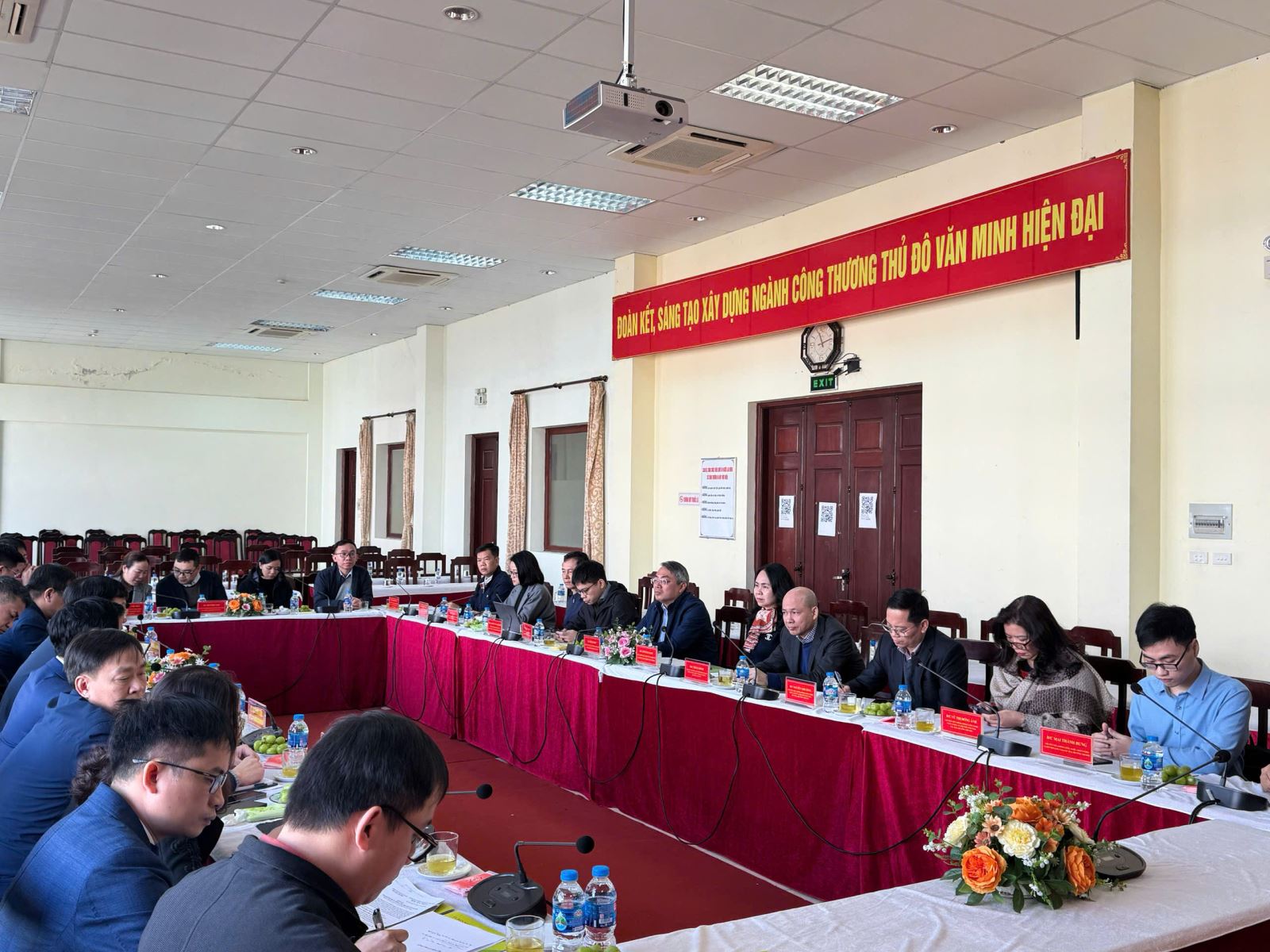
Based on the report from the Hanoi Department of Industry and Trade, leaders and representatives from various departments under the Ministry of Industry and Trade exchanged and shared experiences in implementing these initiatives in several localities; they also clarified the approach, roadmap, and methods for implementing tasks related to science, technology, innovation, and digital transformation in the industry and trade sector.
Ms. Le Hoang Oanh, Director of the Department of E-commerce and Digital Economy, shared that digital transformation in the industry and trade sector needs to be implemented systematically and synchronously, linked with administrative procedure reform, improving the efficiency of state management and supporting businesses to participate more deeply in the digital economy. In this context, e-commerce and digital platforms play a crucial role in expanding markets and enhancing the competitiveness of businesses, especially small and medium-sized enterprises, cooperatives, and household businesses. According to its assigned functions and tasks, the Department of E-commerce and Digital Economy shared four main contents related to Resolution 57-NQ/TW that the Department is currently implementing. Specifically: 1) Institutional development; 2) Building a database for the industry and trade sector and sharing and connecting with localities; 3) Simplifying administrative procedures; 4) Applying digital technology in the management and development of e-commerce.
.jpeg)
According to the Director of the Department of E-commerce and Digital Economy, for the Hanoi Department of Industry and Trade – a locality with a large economic scale, high density of businesses, and a vibrant consumer market – the implementation of solutions for developing e-commerce and the digital economy needs to be closely linked to the city's realities, while also adhering to Hanoi's socio-economic development orientations, plans, and programs.
To concretize the orientations for the development of e-commerce and the digital economy in local practice, the application of new digital technologies to trade promotion activities is becoming an inevitable trend. At the meeting, Mr. Nguyen Huu Tuan, Director of the Center for E-commerce and Digital Technology Development - eComDX (Department of E-commerce and Digital Economy), introduced the potential and trends of applying Internet of Things (IoT) and augmented reality (AR) technologies in trade management activities and suggested directions for some activities of the Project being implemented by the Department.
.jpeg)
Mr. Nguyen Huu Tuan believes that the application of Internet of Things (IoT) and augmented reality (AR) in trade management not only contributes to innovating methods of promoting and introducing products but also creates conditions for localities to gradually shift from traditional trade to digital trade, in line with the development trend of e-commerce and the digital economy. Especially for localities with strengths in industrial products, agricultural products, handicrafts, and distinctive products, these technologies help enhance product value and expand market access.
Based on that, Mr. Nguyen Huu Tuan proposed that the Hanoi Department of Industry and Trade research and integrate the application of IoT and augmented reality into trade promotion programs, business support, and market development initiatives of the city; and at the same time, strengthen coordination with the Department of E-commerce and Digital Economy in the process of developing plans and projects for the 2026-2030 period, ensuring they closely follow the direction of the Ministry of Industry and Trade and the practical requirements.
At the meeting, representatives from the Department of Innovation, Green Transformation and Industrial Promotion (Ministry of Industry and Trade) also shared major orientations on promoting innovation, applying science and technology, developing a green economy and green transformation in the industry and trade sector. Accordingly, localities need to focus on building and replicating environmentally friendly production and business models that efficiently use resources and energy; while strengthening support for businesses to innovate technology, improve production processes and increase the added value of products.
Connecting technological resources for the period 2026-2030
During the meeting, representatives from various departments under the Ministry of Industry and Trade also suggested many effective solutions, models, and approaches for the Hanoi Department of Industry and Trade to study and apply in the future. They emphasized strengthening coordination between specialized units of the Ministry and the locality in guiding and supporting implementation; and promoting the sharing of information, data, and practical experience.
The delegates also focused on discussing the direction for developing plans and projects to implement tasks in 2026 and the 2026-2030 period, ensuring they closely follow the direction of the Ministry of Industry and Trade and the City of Hanoi, while also being consistent with practical conditions, highly feasible, and effective in the long term.
In particular, many opinions suggest that, in order to effectively implement tasks related to science, technology, innovation, and digital transformation, the Hanoi Department of Industry and Trade needs to continue focusing on improving the quality of human resources; strengthening training and professional development for officials and civil servants; and promoting cooperation with research institutes, universities, technology companies, and related organizations.
Concluding the meeting, the leaders of the Hanoi Department of Industry and Trade acknowledged the attention, support, and cooperation of the specialized departments under the Ministry of Industry and Trade; and affirmed that they would seriously consider the directives and guidance given at the meeting. In the coming time, the Hanoi Department of Industry and Trade will focus on reviewing and perfecting its tasks in line with the Ministry's orientation; promoting the application of information technology in state management, supporting businesses in innovation and green transformation; and strengthening training and human resource development and expanding cooperation with research institutes, universities, and technology enterprises to enhance the capacity to implement tasks related to science, technology, and digital transformation.