To enhance the capacity of lecturers in the context of Vietnam's sustainable e-commerce development, the Department of E-commerce and Digital Economy (Ministry of Industry and Trade), VECOM, and Gia Dinh University (GDU) jointly organized the 2025 E-commerce and Digital Economy Lecturer Training Program in Ho Chi Minh City, attracting many lecturers from the southern region.
On GDU's side, the program was attended by Assoc. Prof. Dr. Thai Ba Can - Rector of the University, Assoc. Prof. Dr. Lam Hoai Phuong - Vice Rector of the University, MSc. Lawyer Trinh Huu Chung - Vice Rector of the University, MSc. Nguyen Thi Cam Le - Vice Rector of the University, along with leaders of the faculties, clearly demonstrating the University's Board of Directors' interest in the strategy of developing the teaching staff, closely linked to technological trends and digital transformation.
The event was considered a practical activity aimed at helping lecturers update their knowledge, trends, and skills in the field of e-commerce and digital economy, thereby improving the quality of training and meeting the human resource requirements of the digital transformation era. The program was attended by Dr. Le Hoang Oanh – Director of the Department of E-commerce and Digital Economy (Ministry of Industry and Trade), Mr. Tran Van Trong – General Secretary of the Vietnam E-commerce Association (VECOM), along with many experts, managers, and lecturers from key universities in the South.

Assoc. Prof. Dr. Thai Ba Can - Rector of GDU, speaking at the lecturer training event.
On the part of Gia Dinh University, the attendees included Assoc. Prof. Dr. Thai Ba Can – Rector of the University; Assoc. Prof. Dr. Lam Hoai Phuong, MSc. Lawyer Trinh Huu Chung and MSc. Nguyen Thi Cam Le – Vice Rectors; and leaders of the faculties. The full presence of the Board of Directors clearly demonstrates GDU's interest in the strategy of developing its faculty in line with technological trends and digital transformation. In his opening remarks, Assoc. Prof. Dr. Thai Ba Can emphasized: “Given the continuous development of science and technology, regularly updating and supplementing knowledge is an essential requirement – especially in the fields of e-commerce and digital economy. This training program is of practical significance, helping lecturers keep pace with trends, innovate methods, and improve the quality of training in the new context.”
Assessing the importance of human resource training in this field, Dr. Le Hoang Oanh – Director of the Department of E-commerce and Digital Economy – said: “The Government has assigned the Ministry of Industry and Trade to lead the development of the E-commerce Law, expected to be submitted for approval at the end of November 2025. In this law, human resource development is identified as one of the key pillars. Today's training program not only helps lecturers update new trends and knowledge, but also serves as a foundation for disseminating practical values in teaching, contributing to the formation of a high-quality generation of e-commerce human resources for the future.”
Within the framework of the program, four in-depth discussion sessions took place, revolving around key topics such as: the national e-commerce development master plan for the period 2026–2030 with a focus on sustainable, green, and cross-border development; an assessment of the 2016–2025 period and the urgent need for a new E-commerce Law; the interdisciplinary relationship between e-commerce, information technology, logistics, digital marketing, and the digital economy; and strengthening linkages between training institutions through the VecomNet network – a platform connecting more than 50 universities nationwide, promoting training, research, and organizing academic activities for students.
In his opening remarks, Associate Professor Dr. Thai Ba Can - Rector of GDU - emphasized: “Given the relentless pace of scientific and technological development, regularly updating and supplementing knowledge is essential – especially in the fields of e-commerce and digital economy. This training program is of practical significance, helping lecturers keep pace with trends, innovate methods, and improve the quality of training in the new context.”

Every issue related to the field of e-commerce was discussed and analyzed by leading experts, helping the faculty members update their knowledge with useful information to support their teaching.
Entering a new phase, Vietnam's e-commerce is transforming from rapid growth to sustainable development, requiring collaboration between businesses, schools, and regulatory agencies in policy direction, curriculum development, and the development of a faculty with practical digital skills.
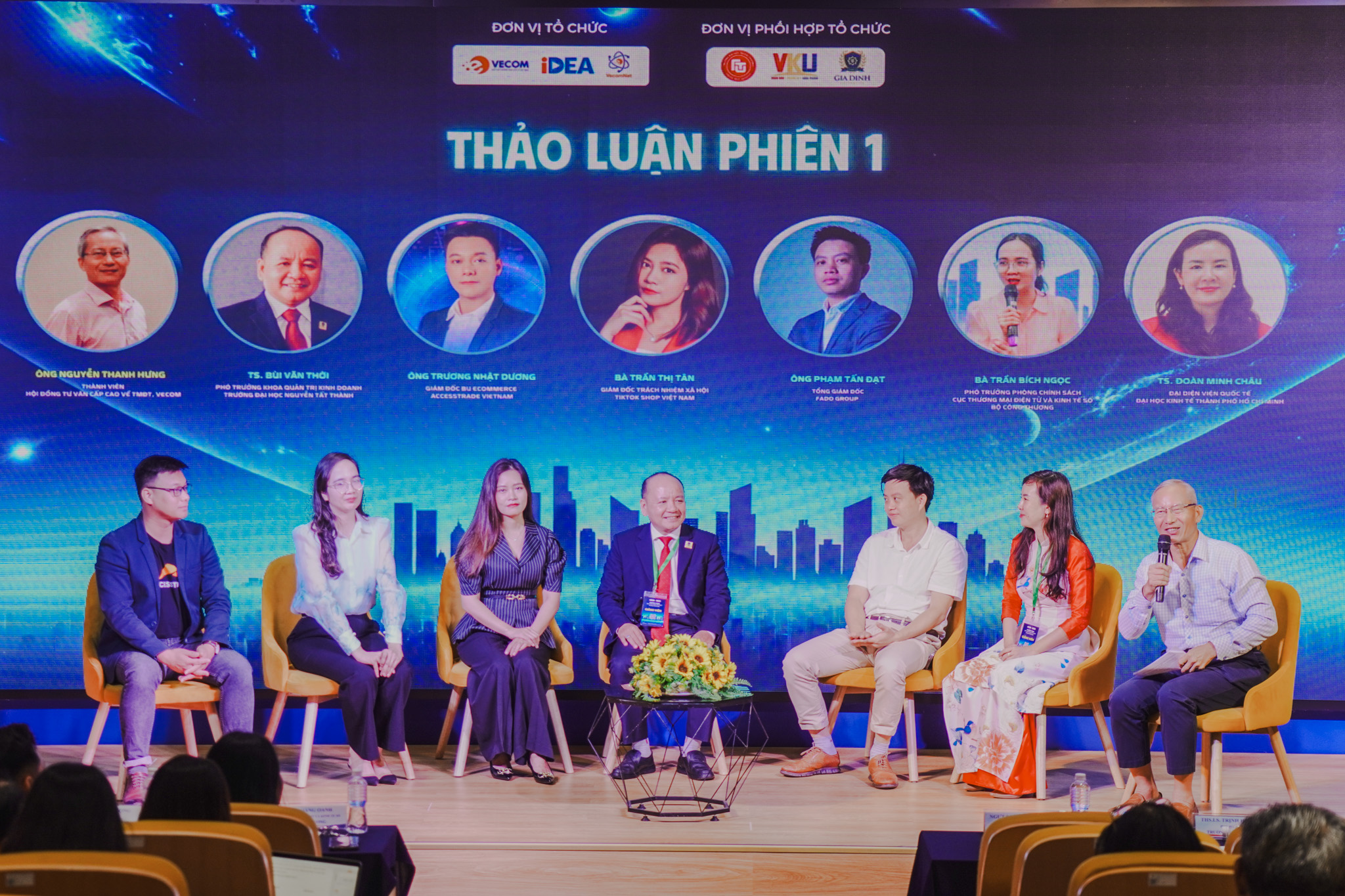
Experts focused on analyzing various issues surrounding development trends, legal mechanisms, and related content in the field of e-commerce and the digital economy.

Many questions raised by the faculty provided diverse perspectives on e-commerce and the digital economy in the new context.
Experts and lecturers exchanged and analyzed many practical issues of e-commerce and the digital economy in the context of integration, providing multifaceted perspectives with rich practical applications. Through the program, the teaching staff not only updated themselves on new policies and trends but also had the opportunity to network and learn from leading experts, thereby applying this knowledge to their teaching and helping students acquire the necessary digital skills for the future.
The event at GDU marks a significant step forward in the collaboration between the university, management agencies, and professional associations, all working towards the goal of building a sustainable e-commerce and digital economy training ecosystem in Vietnam. With its educational philosophy of "Selective – Applied – Popular," Gia Dinh University continuously innovates its training programs, strengthens cooperation with businesses in the fields of technology, e-commerce, and digital finance, contributing to the creation of a young workforce with digital thinking, integration capabilities, and a desire for innovation – crucial elements for the national digital economy.